

 Fax : 1-973-799-0901
 Call us now: +1 408-464-9048


How Many Carbs in Balsamic Vinegar?
 Bryan,
 Oct 1, 2026
Balsamic vinegar adds a sweet, tangy flavor to salads, marinades, roasted vegetables, sauces, and even fresh fruit. Because its flavor is naturally sweeter than most other vinegars, anyone watching their carbohydrate intake usually asks one key question: how many carbs are in balsamic vinegar?
A typical tablespoon of balsamic vinegar contains about 2.7 to 3 grams of carbohydrates. Most of these carbs come from the natural sugars found in grapes. However, the exact amount depends on the brand, concentration, and whether any extra sweeteners or flavorings have been added.
That makes reading the nutrition label your best guide when tracking carbs closely.

How Many Carbs Are in Balsamic Vinegar?
Standard balsamic vinegar generally contains around 3 grams of carbohydrates per tablespoon. It typically contains little to no fat and virtually no protein.
Unlike distilled white vinegar or standard wine vinegars, balsamic vinegar starts with grapes or grape must. This gives balsamic its characteristic balance of sweetness, acidity, and rich flavor, but it also means it carries more carbohydrates than lighter vinegars.
Carb content can vary depending on the product style. Traditional aged balsamic, thicker reductions, glazes, and flavored varieties all have different nutritional profiles.
When comparing products, check the following:
- Serving size
- Total carbohydrates
- Total and added sugars
- Ingredient list
- Added sweeteners
If carb count matters for your diet, reviewing nutrition labels is much more reliable than assuming all balsamic vinegars are identical.

How Many Carbs in a Tablespoon of Balsamic Vinegar?
For a standard single-tablespoon serving, expect roughly 2.7 to 3 grams of carbs in balsamic vinegar.
One tablespoon delivers plenty of acidity and sweetness to elevate a dish, especially when paired with extra virgin olive oil.
Portion size is key. If one tablespoon contains around 3 grams of carbohydrates, using two or three tablespoons naturally increases the total amount consumed. Measuring your portion makes tracking carbs much simpler.
Keep in mind that flavored balsamic vinegars may differ. Ingredients like fruit purees, honey, or concentrated grape juices will raise both the sugar and carbohydrate counts.
Where Do the Carbs in Balsamic Vinegar Come From?
Most of the carbohydrates in balsamic vinegar come directly from the grapes used to produce it.
Balsamic vinegar is made from grape must—freshly crushed grape juice containing the skins, seeds, and stems—often blended with wine vinegar depending on the style. Because grapes naturally contain sugars, some of those natural carbohydrates remain in the finished vinegar.
This natural sugar gives balsamic its noticeably sweeter, rounder flavor compared to sharper options like red wine vinegar.
Commercial balsamic products may also include extra ingredients that bump up the carb total. This distinction is especially important when comparing traditional balsamic vinegar with balsamic glazes or reductions.

Balsamic Vinegar vs. Balsamic Glaze
Balsamic vinegar and balsamic glaze should not be treated as nutritionally identical.
Balsamic glaze is thicker, sweeter, and more concentrated. Many commercial glazes also contain added sugars or sweeteners, which means a single serving of glaze can pack significantly more carbs than regular balsamic vinegar.
If you want classic balsamic flavor without unnecessary carbs, stick with plain balsamic vinegar to keep your portions easy to control.
Save the glaze for dishes where its thick texture and intense sweetness are key to the recipe, and always check the nutrition label rather than applying the carb count for regular balsamic vinegar.
How Many Carbs in Balsamic Vinegar Dressing?
The carb count for balsamic dressing depends almost entirely on how it is prepared.
A basic homemade vinaigrette typically includes:
- Extra virgin olive oil
- Balsamic vinegar
- Herbs and seasonings
- Dijon mustard
- Salt and pepper
Because pure olive oil contains zero carbohydrates, the carbs in a simple oil-and-vinegar dressing come almost entirely from the balsamic vinegar and any added spices.
However, many commercial dressings and recipes add honey, maple syrup, sugar, or fruit concentrates, which significantly raise the carb count.
Store-bought balsamic dressings vary widely for this reason—one brand might be relatively low in carbohydrates, while another contains several grams of added sugar. Always check the serving size and label if you need an exact count.
Can Balsamic Vinegar Fit Into a Lower-Carb Diet?
Balsamic vinegar can easily fit into lower-carb eating plans as long as you pay attention to portion sizes. While a single tablespoon adds only a few grams of carbs, those grams still count toward a daily target.
Instead of labeling balsamic vinegar strictly as "low-carb" or "high-carb," focus on how much you actually use.
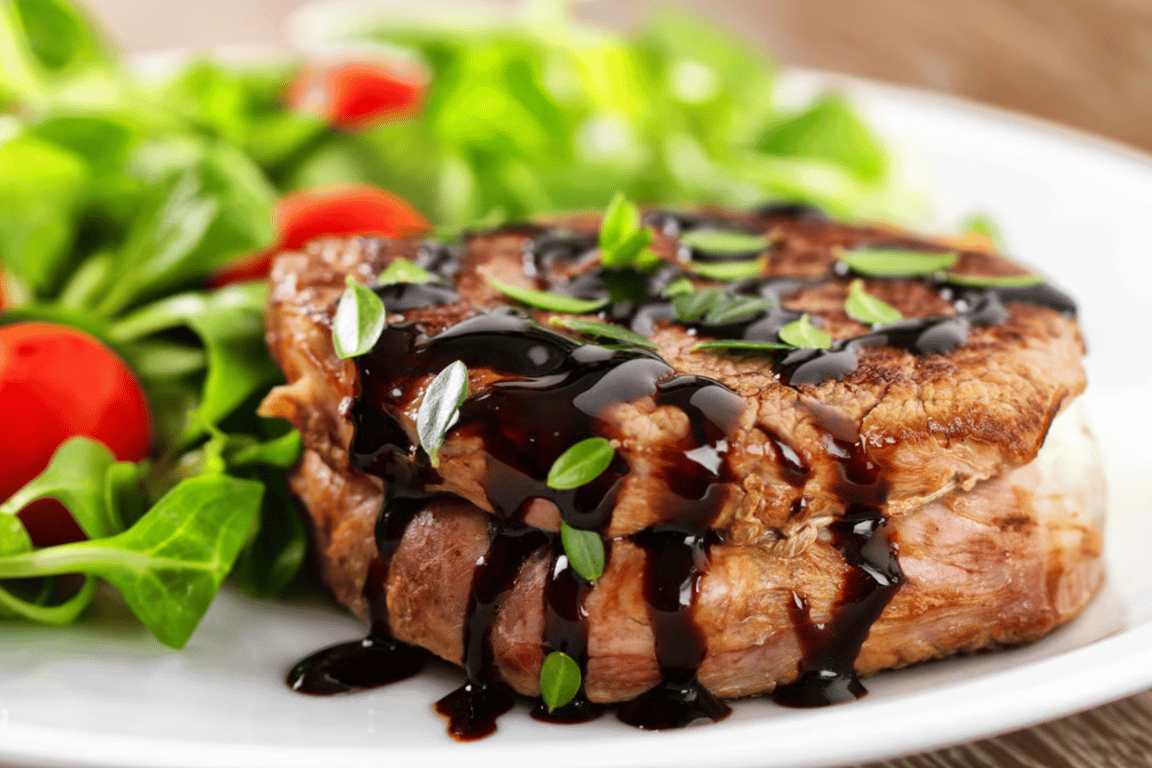
A small drizzle over a salad or mixed into an oil-and-vinegar dressing is easy to account for. On the other hand, heavy pours of sweet balsamic glaze or dressings made with added honey can add up fast.
Individual dietary needs vary. If you are following a medical diet or managing health conditions that require strict carbohydrate control, consult your healthcare provider or dietitian for personalized guidance.
Easy Ways to Use Balsamic Vinegar
Because balsamic vinegar has an intense, concentrated flavor, a little bit goes a long way.
Try using it:
- Whisked with extra virgin olive oil for salad dressing
- Drizzled over ripe tomatoes and fresh mozzarella
- Stirred into marinades for meats or vegetables
- Served with warm bread and olive oil for dipping
- Drizzled over roasted vegetables
- Tossed with fresh berries or other fruit
- Added to pan sauces for extra depth and acidity
Pairing balsamic with a quality extra virgin olive oil lets you easily adjust the vinegar-to-oil ratio to match your taste and dietary preferences.
Explore Balsamic Vinegars at Big Paw Olive Oil
Big Paw Olive Oil offers a full lineup of classic and infused balsamic vinegars for different dishes and flavor preferences.
For a versatile starting point, Big Paw Classic Balsamic Vinegar pairs perfectly with extra virgin olive oil for vinaigrettes, dipping, marinades, and everyday cooking.
If you want to experiment with different flavor profiles, Big Paw also features options like Honey Balsamic Vinegar, Mission Fig Balsamic Vinegar, Sweet Peach Balsamic Vinegar, and Dark Cherry Balsamic Vinegar.
Because nutritional values vary between classic and flavored varieties, check the individual product information if carbohydrate content is important to you.
Pair your preferred balsamic with a Big Paw extra virgin olive oil to create a simple homemade dressing where you control all the ingredients and serving sizes.
Frequently Asked Questions
Q: How many carbs are in balsamic vinegar?
A: A typical tablespoon of balsamic vinegar contains approximately 2.7 to 3 grams of carbohydrates. The exact amount depends on the specific product and ingredients, so check the nutrition label for the most accurate information.
Q: How many carbs in a tablespoon of balsamic vinegar?
A: One tablespoon generally provides about 3 grams of carbohydrates. Flavored balsamic vinegars, reductions, and glazes often contain higher amounts, particularly if sweeteners are added.
Q: How many carbs in balsamic vinegar dressing?
A: There is no single number for balsamic dressing because recipes vary. A simple dressing made with extra virgin olive oil and balsamic vinegar contains only the carbohydrates contributed by the vinegar and seasonings. Dressings made with honey, sugar, fruit concentrates, or other sweeteners can contain much more.
Q: Does balsamic vinegar have more carbs than olive oil?
A: Yes. Pure olive oil contains zero carbohydrates, while balsamic vinegar generally contains about 3 grams per tablespoon. Combining balsamic vinegar with extra virgin olive oil is an easy way to make a flavorful dressing while controlling how much vinegar you use.
Q: Where can I buy balsamic vinegar for dressings and marinades?
A: Big Paw Olive Oil offers Classic Balsamic Vinegar along with a variety of flavored balsamic vinegars. Pair them with Big Paw's extra virgin olive oils for homemade dressings, marinades, bread dipping, roasted vegetables, and other recipes.
Bring More Flavor to Your Kitchen with Big Paw Olive Oil
Knowing how many carbs are in balsamic vinegar helps you make informed choices without giving up the rich, sweet-tangy flavor that makes balsamic so versatile.
Explore Big Paw Olive Oil's collection of balsamic vinegars and extra virgin olive oils to find ideal pairings for salads, marinades, dipping, vegetables, and everyday cooking.
Shop Big Paw Olive Oil today and create delicious oil-and-vinegar combinations right at home.
